
Hey Lovers
Some books, some math, some good news tabs--and a rebus Valentine too.

I found this Rebus Valentine, which means a letter using what I can only think were 19th century French emojis. I think it’s for you though I hope it’s not terribly obscene when you decode it.
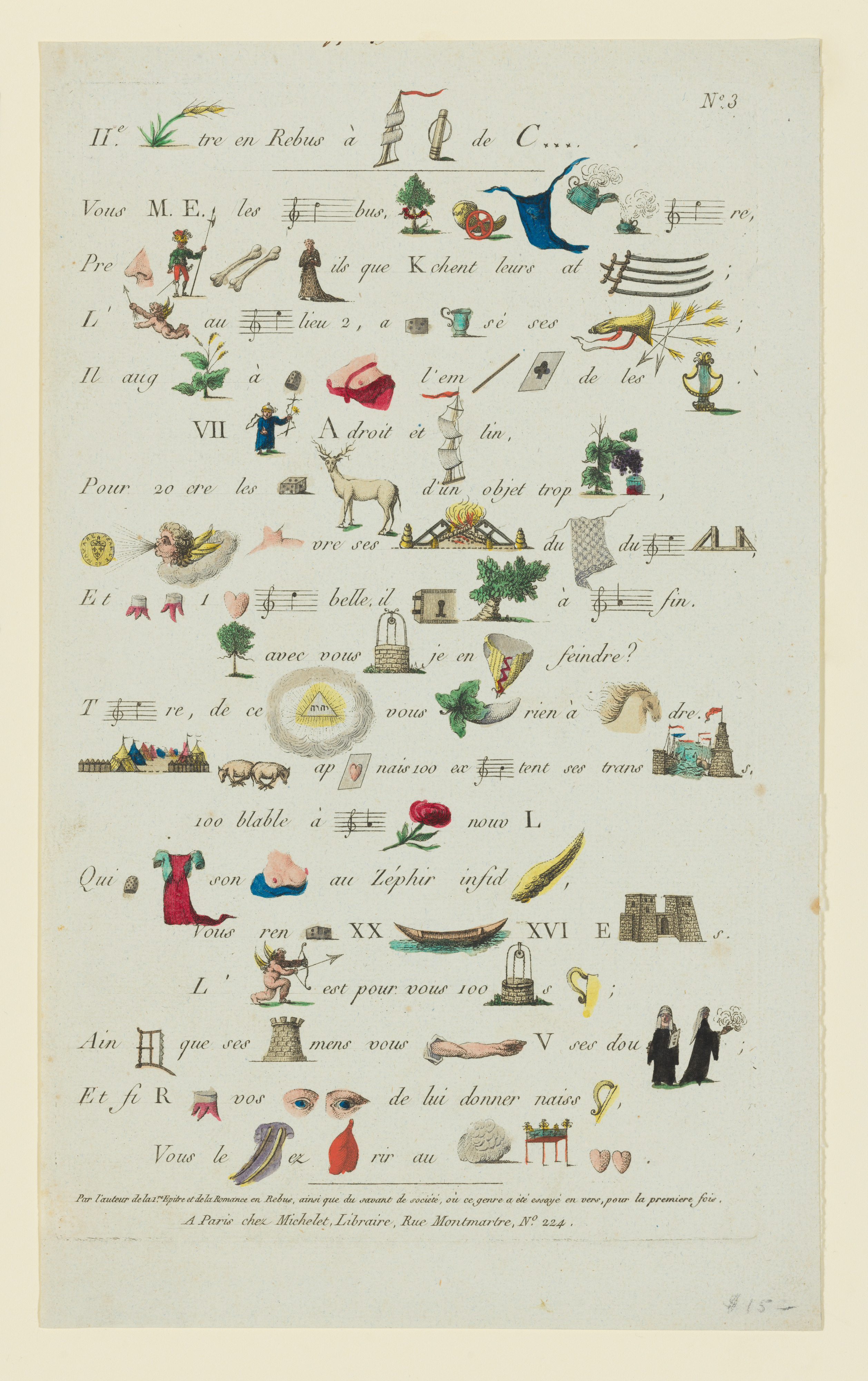
A Rebus Valentine Letter, circa 1840, Met Open Access
My mind is a little all over the place but here we go. Now for some math.
1 in 1000 residents of this country have been detained by ICE, with just 2% acknowledged to be “criminals.” That’s 379,000 people in a year.
38 billion is about to spent on warehouses around the country to create concentration camps to hold about 92000 people. That’s $400,000 per person, and the total is equal to the annual spending currently for 22 states. Most of that money will be paid to private companies, run by Trump donors. These future captives are people who will be denied food and medical care, clean quarters, and who will be dealt with brutally, possibly killed or trafficked.
In Kansas City, in that article from the Washington Post above, a detention center was stopped when the community passed a five year ban on all new detention centers., proving the power of local politics. Now is the time to get your NIMBYs activated.
I woke up Saturday to the news that DHS funding is officially frozen in the new budget for now, I found Ed Kilgore at NYMag easy to understand on the stakes and the problems involved. This freeze doesn’t yet stop the ICE raids, and it doesn’t stop their execrable violence and mayhem, with tactics that now include pretending to need car help from passing motorists and neighbors, and then the seizing people who try to assist. This is a tactic Ted Bundy used, if it sounds familiar. I am still relieved somehow that this previously impossible thing to imagine—that DHS might be denied anything—has happened, and that only one Democratic Senator, the awful John Fetterman, broke ranks. In any case, I have felt the faintest feeling of calm that this even was possible.
Other good news: The Trump administration dropped its appeal of the injunction ruling protecting UCLA’s funding from Trump shakedown, a victory for UCLA and academia, but also for faculty governance there—the administration of the university, as I understand it, was not as interested in defending the school as the faculty, who feared becoming like other colleges and universities who fell in line. I’m grateful to them. Costco ignored the Trump DEI directives and reports show their business is booming, unlike their competitors who caved (hi Target).
On a lighter note, if you love sandwiches, as I do, you will celebrate the news that Tal Levin has turned his attention to the Reuben over at his sandwich newsletter. In news unrelated to sandwiches, but which could be said to be about snacks, I was moved to see Heated Rivalry’s Hudson Williams out in New York City for his birthday with his mother, Sunny Williams, who was looking happy and so proud of her son. Hudson and his mother Sunny seem entirely removed from the more traditional Korean homophobia too many of us know too well, and so I will say I’m proud of her for being so proud of him.
*
Speaking of Heated Rivalry, few things have colored my thinking in recent times as much as Jenka Gurfinkel’s essay on the anti-dystopian character of the series and the way the dystopian is being used as a kind of censorship of hope in stories across genres and categories. I have been texting it to friends so here I am sending it now to all of you.
Dystopia at its core is about cynicism. The cynicism of resignation to the future being inevitably more of the same, but worse. The cynicism of disappointment that things aren’t what we had expected to be entitled to. It doesn’t have to be science fiction to be a dystopia. So often, shows set in a world indistinguishable from our own are peopled with characters who are almost anaphylactically averse to experiencing or communicating genuine emotion. Where stories use sincerity as a punchline. Where even when characters perform intimacy—platonic or otherwise—they are choked in layers of irony, fear, self-loathing, and dissociation. Where we watch actors pantomime connection and experience nothing genuine transmuted through the screen. Where intimacy and emotional depth are merely script direction: [Vulnerability goes here.]
Its easy to understand the appeal. Cynicism is prophylactic. It allows us to walk through a deeply scarred, imperfect world without being swallowed up and destroyed by its horrors. It allows us to compartmentalize the news we see on our screens, sigh, and then go back to finishing the email due by the end of the business day. It deadens us and desensitizes us from feeling anything too much amid the tragedies. It allows us to reconcile the dissonance between the toxicity all around us, and our desperate yearning to breathe in something that doesn’t make us sick.
*
I am always looking for something that makes me feel more rather than less human. So last weekend for example I binged and read all of Kim Hyun Sook and Ryan Estrada’s graphic novels, collaborations between married people (this is actually extremely hard to do)—Banned Book Club, No Rules Tonight, and Good Old-Fashioned Korean Spirit. They reminded me of one of the first internet searches I ever made, in the late 1990s. I was looking for the Korean word for queer. The chilling result I found back then was a post telling me Koreans would often say that there was no Korean word for it, as it was something that came to Korea from America. A character in No Rules Tonight says this almost exactly. All of these books tell stories inspired by her and her friend’s lives under the military regime of South Korea’s Fifth Republic, back in the 1980s, the era of the Gwangju Uprising. All contain queer characters and the activist tactics she and her friends used to fight back. I found them to be moving, useful, funny and loving. No Rules Tonight even ends with a kind of “where are they now” for the different activist characters. Estrada I had mentioned here a few weeks ago in a previous update—he’d mentioned that Korean journalists had described Minneapolis as America’s Gwangju. So it was powerful to see the book end with the main characters older, happier, and more free.
I thought back to 2018, when I advised an Asian American activist student-led seminar at Dartmouth and they identified the need for intergenerational knowledge transfer between activists as necessary for liberation. I will tell them all about these books.
*
I especially loved this AP story on the ancient nonbinary traditions of the feminelli of Naples, Italy.
The Juta dei Femminielli is an old Catholic event that combines the human with the divine and highlights an identity rooted in cultural expression and Parthenopean, or Neapolitan, mythology. It takes place every year on Feb. 2, when Catholics celebrate Candlemas, the feast commemorating the presentation of Jesus to the temple. During the Mass, faithful bring their candles to the church to be blessed by the priest.
…Despite the Juta being an ancient tradition, this year was the first time transgender women were invited to do the church readings.
I’m obsessed with the queens in the story named Gold Queen and Lust Queen, as well as this story of the origin of the identity and the tradition:
According to medieval lore, in 1256, two young men accused of having a same-sex relationship were dragged by the townsfolk and tied naked to ice slabs on the nearby Mount Partenio, left to die of exposure. The two youths, miraculously saved, believers say, by the nearby Madonna of Montevergine, who melted the ice and freed them from their chains, awing the people of the town. Since then, the figure also known as Mamma Schiavona has become a symbol for those who are oppressed and marginalized but still worthy of divine protection.
Here’s to you, Madonna of Montevergine, aka Mamma Shiavona. Very happy to find a saint who melts ice and saves queer people.
*
My husband and I came to New York City for Valentine’s Day, to celebrate our friend’s Robert Lucy’s art opening at Kentler International Drawing Space, in Brooklyn. Robert’s drawings and paintings usually leave me staring in wonder, and as beautiful as they are digitally, they are more beautiful in person, where the line-work he does is, I’d argue, more entrancing. The show is up through the 29th of March. The below is a perfect Valentine.
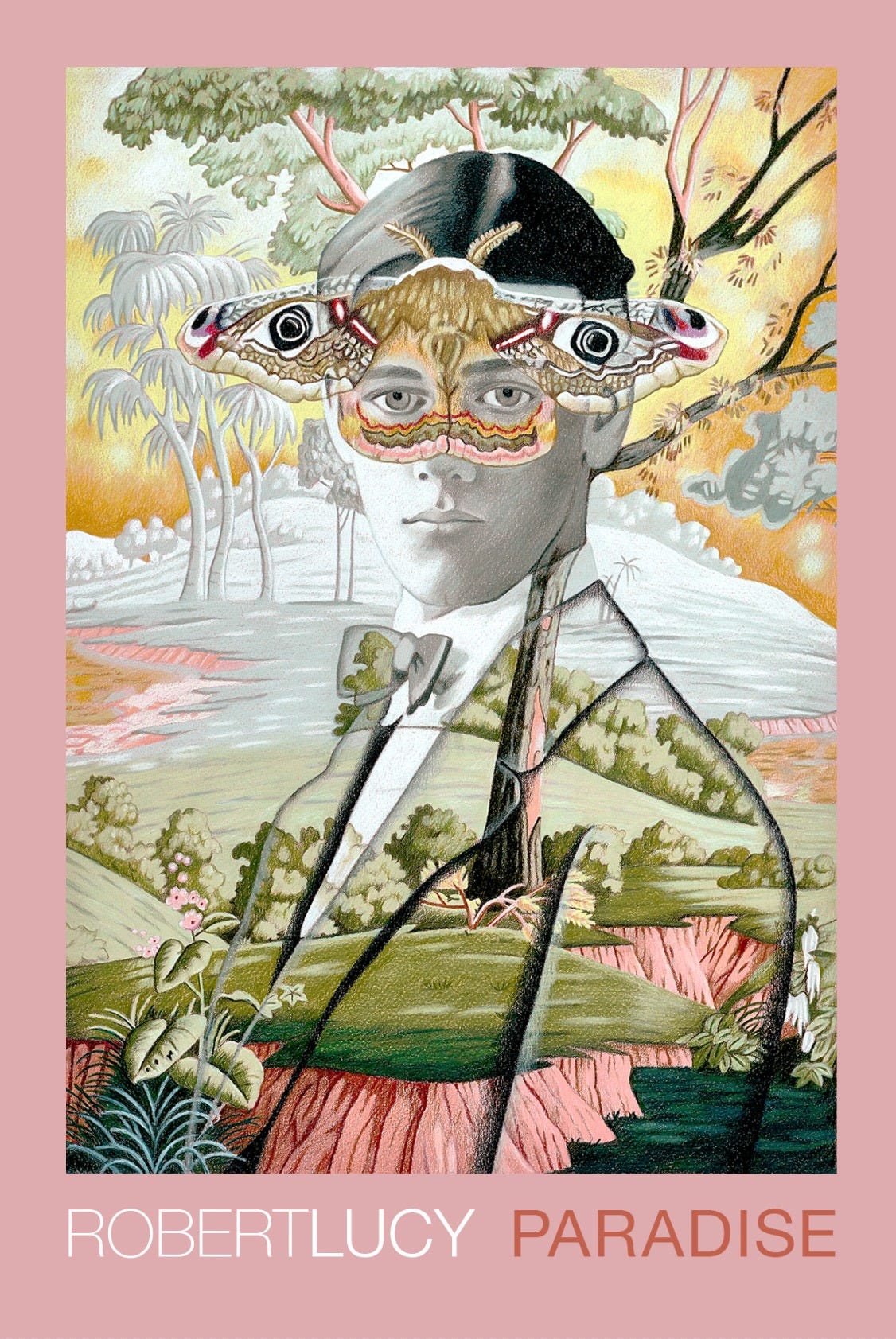
Robert took his subjects from photos he found of unnamed young men from the 19th and 20th century. Robert and his husband, the writer Chris Wells, are new friends of ours, and it was beautiful to spend some time with them last night and to think about these drawings.
*
I’ll finish with some prose recommendations. I’m reading Aria Aber’s debut novel Good Girl, just out in paperback, and am loving it, by which I mean enjoying the darkly sardonic narrator and the way reading the novel feels like following her on a rainy night out on the long branch of a tree that just keeps going and going and you don’t know why but you can’t stop. Also still making my way through A Long Game by Elizabeth McCracken, which I find delightful and wise. It’s hard to read as I keep stopping to go write. It is not The Long Game, by Rachel Reid, but I did have a very funny mistaken identity conversation with Dustin about the two books, with me telling him how much I was enjoying Elizabeth’s book and him asking me if I’d gotten to the trophy room scene. I can’t explain without spoiling but Elizabeth did admit she missed out on not having a trophy room scene in her book.
Until next time,
Alexander Chee
Hi Alex --
Ive been a fan of your writing for quite some time and am so excited to contribute to your knowledge and understanding of something - the femminielli of Napoli. I have been researching them for years and have lived between NYC and Napoli as part of an queer ancestral awakening journey (that also became my first feature documentary: https://vimeo.com/ondemand/summerwithin)
Feel free to check out my Substack, and specifically for posts that have the femminiello tag. Mamma Schiavona is an ancient Pagan black mother deity who was syncretized with Mary, Mother of Jesus, but the deep roots of southern Italian folk dance and music, which is used to venerate her, understand her existence as something much older than Catholicism. Also, Montevergine has always been a home for 3rd gender and queer people, even if the story of the 2 homosexuals saved by Mamma Schiavona is acknowledged as more of a fable than a piece of history.
Thanks for your work <3 <3 looking forward to connecting with you more.
Con amore, with love,
Summer Minerva
Chris and Bobby are dear friends of mine. Both wonderfully talented. I love Bobby’s work. Glad to know you and Dustin have gotten to know them.